
Helping Your Dog Walk Comfortably Again
A torn ACL (also called a CCL injury) is one of the most common orthopedic conditions in dogs—and one of the most painful. If your dog is limping, avoiding weight on a leg, or struggling to stand, a ligament injury may be the cause.
At Vogel Veterinary Emergency and Specialty, we provide advanced veterinary surgery for canine torn ACL injuries in Stratham, NH, helping dogs across Exeter, Portsmouth, and the Seacoast region return to comfortable, active lives.
Our experienced surgical team performs TPLO (Tibial Plateau Leveling Osteotomy), a highly effective procedure designed to stabilize the knee and restore mobility.
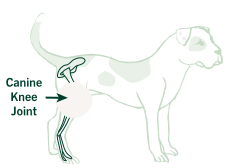
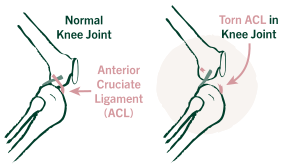
The ACL in dogs (called the cranial cruciate ligament or CCL) stabilizes the knee joint. When this ligament tears:
CCL injuries often happen gradually due to degeneration, though sudden injury can also occur.
If you notice these signs, early evaluation is important to prevent further joint damage.
A deep dive into more signs your dog may have a torn ACL
TPLO (Tibial Plateau Leveling Osteotomy) is one of the most advanced and effective procedures for treating canine torn ACL injuries.
Instead of replacing the ligament, TPLO:
This results in improved stability, reduced pain, and better long-term outcomes.
A deep dive into what TPLO surgery involves.
TPLO is often recommended because it:
Our canine orthopedic surgeon carefully evaluates each patient to determine if TPLO is the best option.
Most dogs recover very well after TPLO surgery.
Typical recovery includes:
Many dogs regain excellent function and return to walking, running, and playing comfortably.
Continuous Monitoring
Dedicated Nurse
ICU Recovery
While not always an immediate emergency, delaying treatment can:
If your dog suddenly cannot bear weight or is in severe pain, visit our emergency team immediately.

Prepare a quiet, comfortable recovery space at home. Review all instructions provided by our team and ask any questions in advance so you feel fully prepared for your pet’s care.
Yes. We offer emergency surgical care through our 24/7 emergency service. If your pet needs urgent surgery, come directly to our hospital.
If it is an emergency, you can bring in your pet any time day or night without an appoint and we will see you.
Otherwise, the first step is contacting our hospital to make an appointment. Our surgical coordinator will schedule your pet’s procedure and provide all necessary pre-operative instructions.
Yes, we accept pet insurance and can assist with pre-approvals and claim submissions.
Your pet is cared for by a licensed nurse throughout surgery and recovery. After anesthesia, they are monitored in our ICU, where our team ensures a safe and stable recovery.
Follow-up care depends on the procedure. If needed, we will provide clear instructions and help coordinate ongoing care to support your pet’s full recovery.
If you suspect your dog has a torn ACL, early evaluation makes a difference. Our experienced surgical team provides advanced TPLO surgery with a focus on safety, comfort, and long-term success.
We proudly provide care services for pets in:
Stratham, NH | Exeter, NH | Portsmouth, NH | Greenland, NH | Newmarket, NH | Hampton, NH | Surrounding Rockingham County communities